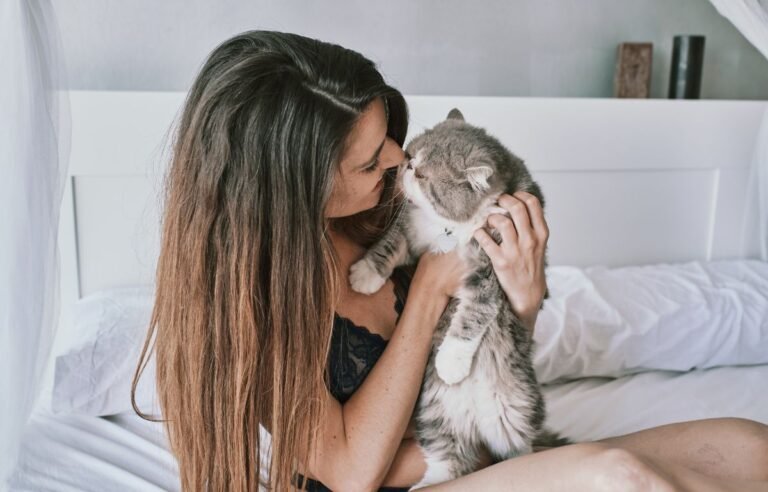
Why Cats Meow at Night can feel like a mystery.
One moment you are peacefully dreaming.
Then — Mjau! Your furry alarm clock strikes again.
Night vocalizations are common, but they are not random noise.
Your cat is trying to tell you something.
Let’s decode those late-night cat conversations and help everyone in the house finally get some sleep.
Quick Answer – Why Cats Meow at Night
Cats meow at night because of:
• Hunger or routine
• Boredom and excess energy
• Stress or separation anxiety
• Aging and medical issues
• A desire for attention or companionship
Most causes can be solved with better enrichment, routine, and comfort.
But knowing why matters first.
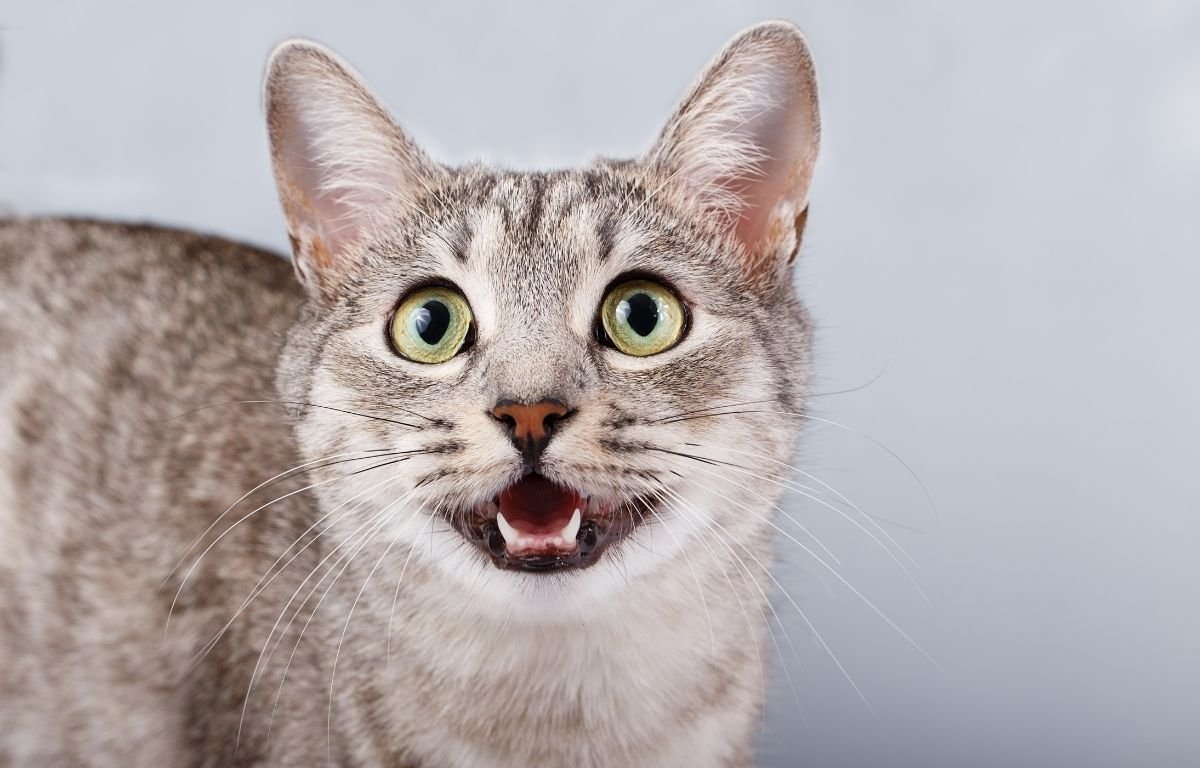
Why Cats Meow at Night: The Real Reasons
Cats communicate through sounds, scents, and body language.
Nighttime meowing is one of their loudest conversations with humans.
Hunger or “schedule reminder”
Cats are masters of routine.
If dinner was late or the bowl looks suspiciously empty… they will file a complaint.
A quick snack before bedtime can solve this fast.
Automatic feeders also help maintain a predictable feeding schedule.
Extra energy and instinct
Cats are crepuscular.
That means they are naturally most active at dusk and dawn.
In the wild, those are hunting hours.
At home, that becomes “let’s run across the bed and meow loudly at mom” hours.
More play before sleep = less midnight mission time.
A feather wand or a laser session works wonders.
Stress or anxiety
Any change can upset a cat:
• Moving home
• New pet
• Rearranged furniture
• A baby crying in another room
Stress makes them call out to their humans for reassurance.
Sometimes they just want to check that you are still their safe person.
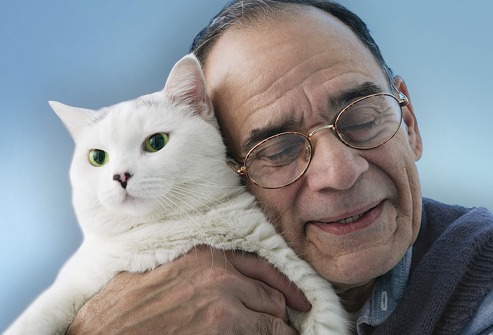
When a cat feels deeply bonded, your cat chooses the human they trust the most — and they tell you when something feels “off.”
Seeking attention and connection
Some cats meow at night because they are lonely.
Especially single cats in small apartments.
This often happens if:
• They sleep alone
• Their human has long work hours
• There is no evening cuddle ritual
Night meowing can be a request for love:
“Hello? Are you awake? I miss your hands. Pet me right now.”
If you notice reduced cuddling during the day, explore why your cat doesn’t want to cuddle sometimes.
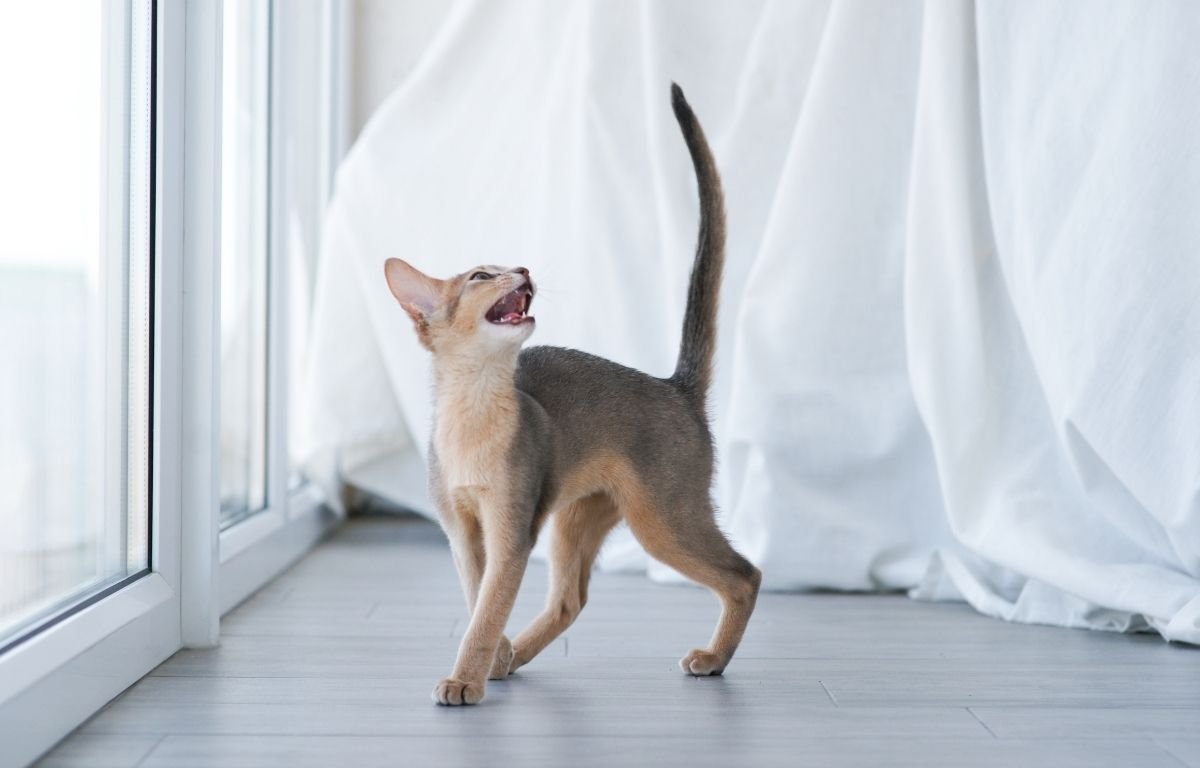
Aging and confusion
Senior cats often face:
• Cognitive changes
• Poor eyesight
• Hearing loss
They might feel disoriented in the dark.
Meowing helps them locate you or ask for help.
Soft lights and cozy safe zones can calm them.
Health concerns
If nighttime meowing suddenly starts, don’t ignore it.
Cats cry out when something hurts:
• Overactive thyroid
• Urinary issues
• High blood pressure
• Dental pain
A vet check keeps your feline friend comfortable and healthy.
How to Help a Cat That Meows at Night
Good news — you can improve your sleep and theirs.
Create a calm bedtime routine
Cats relax when everything feels predictable.
Try:
• Same feeding time
• Same playing time
• Same cuddle time
Consistency = calmness.
Increase play before bed
A tired cat is a quiet cat.
Use toys that activate their inner hunter:
• Wand toys
• Mice on strings
• Puzzle feeders
Aim for 15–20 minutes of “pre-sleep zoomies.”
Add interest to their nights
If they wake up bored, they will wake you.
Night enrichment ideas:
• Perches near the window
• Motion toys
• A cardboard box city
Cats need stimulation to stay mentally satisfied.
Offer comfort and companionship
Some cats just need a warm presence.
Leaving a T-shirt with your scent nearby can help.
A soft blanket in a familiar spot also boosts security.
If your cat often sticks close to you, that’s a sign of emotional connection.
Many cats pick exactly the human they feel safest with.
Read the sweet psychology behind it → your cat chooses you
Feed a late snack
A light snack before bedtime stops 3 a.m. hunger protests.
Wet food or a small portion of kibble usually does the trick.
Ignore the drama — carefully!
If meowing brings attention, they will continue.
Do not reward the behavior by waking up every time.
But — rule number one — first make sure your cat’s needs are met.
Visit the vet if needed
Call your vet when:
• Meowing is new
• It sounds like pain
• There are changes in behavior or litter box habits
Better safe than sleepy.
FAQs – Why Cats Meow at Night
Is nighttime meowing normal?
Yes, especially in young or active cats.
It’s still something to guide gently.
Should I sleep with my cat?
If you enjoy it — absolutely!
If not — give them a cozy bed in your room.
Do kittens grow out of it?
Mostly yes.
They sleep better as they mature and learn the family schedule.
Can I train a cat to stop meowing at night?
You can reduce it.
Training + enrichment + routine = quieter nights.
Why do some cats yowl, not meow?
Yowling often signals stress, confusion, or health issues.
Check with your vet if it continues.
Final Thoughts – Why Cats Meow at Night
Your cat isn’t singing midnight opera to annoy you.
They are talking.
Asking.
Feeling.
Connecting.
Understanding their nighttime voice helps strengthen your bond — and gives you back some precious sleep.
Stay connected with us!
Want more behavior tips and adorable cat stories?
Join our community on Instagram:
👉 https://www.instagram.com/lifewithcatman/