White Tigers – Do They Still Exist in the Wild?
White Tigers – Do They Still Exist in the Wild?
This question sounds simple at first, yet it opens a story shaped by fascination, rarity, and several uncomfortable facts. White tigers have captured human attention for generations, often appearing in stories, photographs, and viral posts as symbols of mystery and power. Many people assume they still roam freely somewhere, hidden deep in forests, while others believe they are purely a human-made phenomenon. The truth sits somewhere in between and deserves a calmer, clearer explanation.
White tigers are real animals with a documented history in nature, but their current status is often misunderstood. To understand where they stand today, we first need to explain what a white tiger actually is and why its existence has always been uncommon.
What Exactly Is a White Tiger?
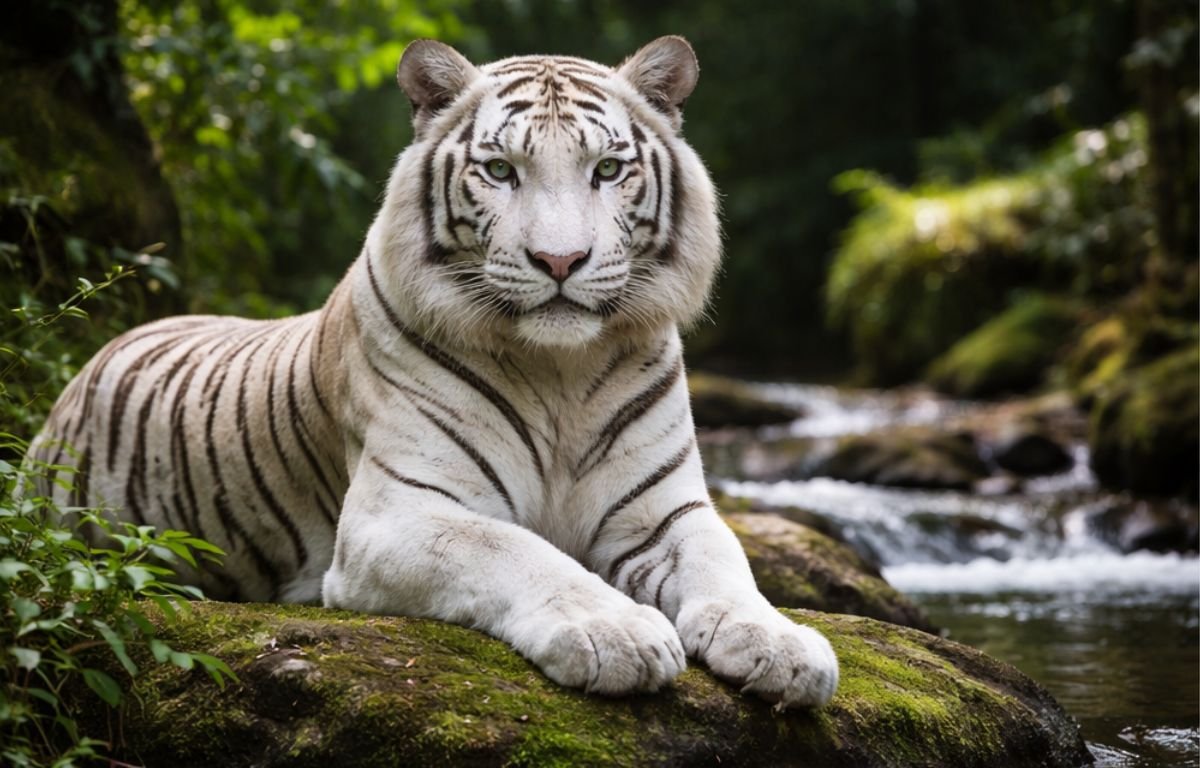
A white tiger is not a separate species or subspecies. It is a Bengal tiger born with a rare genetic variation that affects coat pigmentation. This condition is known as leucism, which reduces pigment but does not remove it entirely. Because of this, white tigers still have visible stripes, usually dark brown or black, and their eyes are most often blue or green.
This detail matters because white tigers are often confused with albino animals. Albino animals lack all pigment and typically have red or pink eyes. White tigers do not fit that description. Genetically and biologically, they remain full tigers in every other way, with the same instincts, strength, and behaviors as their orange counterparts.
The gene responsible for white fur is recessive. This means both parents must carry it for a cub to be born white. Even then, the chances remain low, which explains why white tigers were always rare, even when tiger populations were much larger.
Did White Tigers Ever Exist in the Wild?
Yes, white tigers did exist in the wild. Historical records confirm their presence, primarily in India, during the 19th and early 20th centuries. Most documented sightings came from central and eastern regions, where dense forests once supported healthy tiger populations.
Local accounts, hunting records, and early photographs all point to naturally born white tigers living freely. They were never common, but they were real. Unfortunately, their rarity made them targets rather than protected animals. Hunters viewed them as trophies, while collectors saw them as valuable curiosities.
The last widely accepted wild white tiger was reportedly seen in the 1950s. After that point, confirmed sightings disappeared, marking the end of their presence in nature as we know it.

Why White Tigers Vanished From the Wild
Several factors contributed to the disappearance of white tigers from natural habitats, and none of them are particularly mysterious. First, camouflage plays a critical role in a predator’s survival. Tigers rely on blending into their surroundings to hunt effectively, and white fur provides a serious disadvantage in green and shadowed forests.
In addition to natural challenges, human interference accelerated their decline. White tigers were hunted more aggressively precisely because they were rare. Their skins, stories, and eventual capture brought attention and profit, which further reduced their already limited numbers.
There is also a genetic reality that often goes unnoticed. When overall tiger populations decline, rare recessive genes disappear even faster. As forests shrank and tiger numbers dropped, the white gene faded naturally from the population.
Where Are White Tigers Today?
Today, white tigers exist only in captivity. Zoos, wildlife parks, and private collections around the world house them, but none are considered wild animals in the true sense. Almost all living white tigers today descend from a very small genetic pool.
Most modern white tigers can be traced back to a single male captured in India decades ago. This limited ancestry led to widespread inbreeding, which continues to shape their health and longevity. While breeding programs preserved their appearance, they did not preserve genetic diversity.
This reality creates an important distinction. White tigers are real, but their current form is the result of human-managed breeding, not natural evolution.
The Health Costs Behind the Beauty
White tigers are undeniably striking, yet their beauty often hides serious health concerns. Inbreeding increases the risk of physical and neurological issues, and these problems are far more common in white tigers than in orange Bengal tigers.
Many white tigers suffer from crossed eyes, spinal deformities, weakened immune systems, and joint problems. Some experience reduced lifespans, while others struggle with mobility throughout their lives. These issues are not always visible to visitors, especially in carefully curated environments.
This raises ethical questions that divide conservationists and animal welfare experts. Preserving appearance alone does not equal conservation, and visual appeal should never outweigh an animal’s quality of life.
Are White Tigers Truly Endangered?
White tigers are not classified as endangered as a separate group. Conservation programs focus on species, not color variations. Bengal tigers, as a whole, remain endangered due to habitat loss, poaching, and human conflict.
Protecting forests and natural ecosystems helps preserve genetic diversity across entire populations. That diversity includes rare traits, even if they no longer appear visibly. Conservation works best when it supports nature’s balance rather than selective breeding.
This distinction matters because public attention can easily drift toward spectacle instead of substance.
White Tigers Compared to Other Rare Tigers
White tigers are not the only unusual-looking tigers in the world. Some tigers display extremely dark and dense stripe patterns, often referred to as black tigers, though they are technically pseudo-melanistic. Unlike white tigers, these darker-patterned animals still appear in the wild today.
Their markings may actually provide better camouflage in certain environments, which helps explain their continued survival. This contrast highlights how nature favors traits that support function rather than visual rarity.
It also shows that not every rare trait disappears for the same reason. Survival depends on usefulness, not uniqueness.
The Myth of Hidden Wild White Tigers
Stories about secret populations of white tigers still circulate online. These tales often suggest they live deep in remote forests, untouched by humans. While romantic, such claims lack credible evidence.
Modern conservation relies heavily on camera traps, satellite tracking, and genetic monitoring. If white tigers existed in the wild today, consistent proof would exist. The absence of evidence, in this case, is meaningful.
Respecting wildlife means respecting facts, even when they challenge comforting myths.
Should White Tigers Still Be Bred?
This question remains controversial. Some facilities argue that white tigers attract attention and inspire curiosity about wildlife conservation. Others believe breeding them continues a cycle of unnecessary suffering.
Intent and execution make a difference. Facilities focused on education, welfare, and transparency differ greatly from those prioritizing entertainment. Visitors play a role here as well by asking questions and supporting ethical practices.
Curiosity should lead to understanding, not exploitation.
What White Tigers Teach Us About Nature
White tigers offer an important lesson about fragility. A single gene, once present in nature, can disappear within a few generations. Human actions accelerate that process, often without intention.
They also remind us that conservation is not about preserving what looks beautiful, but about protecting what allows life to continue. Stories about wild cat behavior, instincts, and adaptation reveal far more about nature’s intelligence than color alone.
Understanding animals means seeing beyond appearances.
Why White Tigers Still Captivate Us
Despite everything, white tigers continue to inspire awe. They feel almost mythical, as if pulled from a legend rather than a forest. That emotional response is natural and deeply human.
When guided properly, fascination can become respect. Learning the full story transforms admiration into responsibility. Loving animals also means accepting truths that are less glamorous.
FAQ – White Tigers and the Wild
Did white tigers ever live in the wild?
Yes, they were documented in India until the mid-20th century.
Are there white tigers in the wild today?
No verified wild populations exist today.
Are white tigers albino?
No, they have leucism, not albinism.
Why do zoos still have white tigers?
Mostly due to historic breeding programs and public interest.
Are white tigers endangered?
They are not classified separately from Bengal tigers.
Could white tigers survive in the wild today?
They would face serious challenges due to camouflage and genetics.
White tigers are not just a story about rarity. They are a reminder of how easily nature can change when humans interfere.
If you enjoy thoughtful stories about cats, instincts, and the deeper bond between humans and felines, follow us on Instagram.