Why My Cat’s Behavior Changed After We Moved Homes
Why my cat’s behavior changed after we moved homes is one of the most common questions cat owners ask after a move.
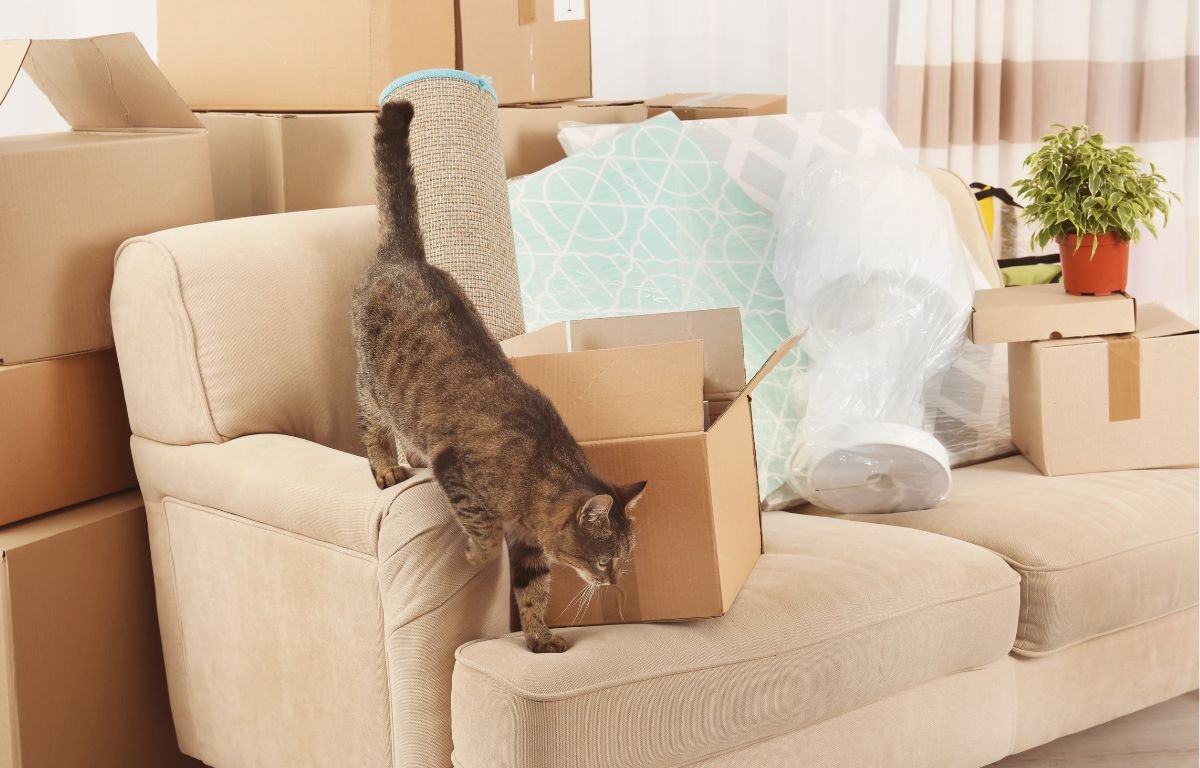
You unpack boxes.
Your cat hides under the bed.
You feel excited.
Your cat feels confused.
This reaction is not rejection.
It is communication.
Let’s break down what is really happening.

Why My Cat’s Behavior Changed After We Moved Homes
A move resets your cat’s entire world.
Not just the walls.
Not just the furniture.
Cats experience home through smell, routine, and control.
When those disappear, behavior shifts.
This is not bad behavior.
It is survival behavior.
Understanding that changes everything.
Moving Feels Bigger to Cats Than to Humans
Humans see upgrades.
Cats see loss.
Your cat did not choose this change.
Their safe map vanished overnight.
Even confident cats feel shaken after relocation.
Sensitive cats feel it even more.
That’s why behavior often shifts immediately.
Cats Read Homes Through Scent, Not Walls
To your cat, home equals familiar scent layers.
Couch.
Corners.
Your clothes.
When those scents disappear, territory resets.
Your cat feels like a guest..
Common Behavior Changes After Moving
Most changes fall into predictable patterns.
You are not alone here.
Hiding More Than Usual
Hiding is protection.
Not fear of you.
Your cat is observing from safety.
This stage is temporary.
Forcing interaction slows recovery.
Sudden Clinginess or Distance
Some cats attach harder.
Others pull away.
Both responses mean the same thing.
They are recalibrating trust.
You might notice this mirrors patterns discussed in why cats choose one person, especially after stress.
Changes in Eating or Litter Box Habits
Stress affects digestion fast.
Appetite shifts are common.
Short-term changes are normal.
Persistent ones need attention.
Increased Vocalization or Silence
Some cats talk more.
Some go quiet.
Both are stress responses.
Neither means permanent change.

Emotional Reasons Behind the Change
Behavior is emotional language for cats.
Not attitude.
Stress and Loss of Control
Cats rely on predictability.
Moving removes it instantly.
Control loss triggers anxiety behaviors.
That includes pacing, hiding, or vocalizing.
Territory Reset Anxiety
Your cat no longer knows where they belong.
They must re-claim space emotionally.
This process takes time.
Rushing it backfires.
Trust Rebuilding Takes Time
Trust resets too.
Not because you failed.
But because the environment changed.
Your consistency rebuilds safety.
Positive Changes You Might Notice Too
Not all changes are negative.
Increased Affection After Settling In
Many cats bond deeper after adjustment.
They seek reassurance through closeness.
This phase often surprises owners.
Stronger Bond With One Person
Stress clarifies attachment.
Your cat may choose one anchor person.
This aligns with bonding behavior in cats, especially after transitions.
New Confidence in the Space
Once settled, cats often explore boldly.
New perches.
New routines.
The shy phase fades.
How Long Does It Take for a Cat to Adjust After Moving?
There is no universal timeline.
But patterns exist.
The 3-3-3 Rule Explained for Cats
First 3 days: confusion
First 3 weeks: adjustment
First 3 months: confidence
Some cats move faster.
Others need patience.
Signs Your Cat Is Finally Settling
Eating normally
Using the litter box consistently
Exploring without hiding
These are green lights.
How to Help Your Cat Adjust Faster
Support speeds recovery.
Keep Familiar Smells Close
Your scent anchors safety.
Unwashed clothes help more than toys.
Maintain Old Routines
Same feeding times.
Same play signals.
Routine equals safety.
Create One Safe Room First
Small spaces feel manageable.
Let confidence grow outward.
Let Your Cat Set the Pace
Progress is not linear.
Regression is normal.
Respecting pace builds trust faster.
When Behavior Changes Signal a Bigger Problem
Most changes resolve naturally.
Some do not.
Red Flags You Should Not Ignore
Complete appetite loss
Aggression escalation
Litter box avoidance
These need professional input.
When to Talk to a Vet or Behaviorist
If changes persist beyond weeks.
Or worsen over time.
Early support prevents long-term stress.
FAQ
How long will my cat act strange after moving?
Most cats adjust within weeks, not days.
Is hiding normal after relocation?
Yes. It is a safety response.
Should I force my cat to explore?
No. Let curiosity lead.
Can moving cause aggression?
Stress can amplify defensive behavior temporarily.
Will my cat ever be the same again?
Yes. Often calmer and more bonded.
Final Thoughts – Why My Cat’s Behavior Changed After
Why my cat’s behavior changed after we moved homes is not a mystery.
It is adaptation.
Your cat is not broken.
They are adjusting.
Patience creates security.
Security restores trust.
And trust brings your cat back to themselves.
For daily real-life cat behavior insights, follow us on Instagram: